 Property search is not only valid for homeowners but also for real estate professionals, appraisers, and anyone interested in market trends. By offering this service online, the Auditor’s office has modernized its operations, making property data available 24/7 and reducing the need for in‑person visits.
Or
How the Property Search Works?
If a property owner believes their valuation is incorrect, they can file a complaint with the Board of Revision and present evidence, such as appraisals or comparable sales. This ensures fairness and accountability in taxation. The appeals process is an important safeguard that reinforces trust between government and residents, giving property owners a voice in how their taxes are determined.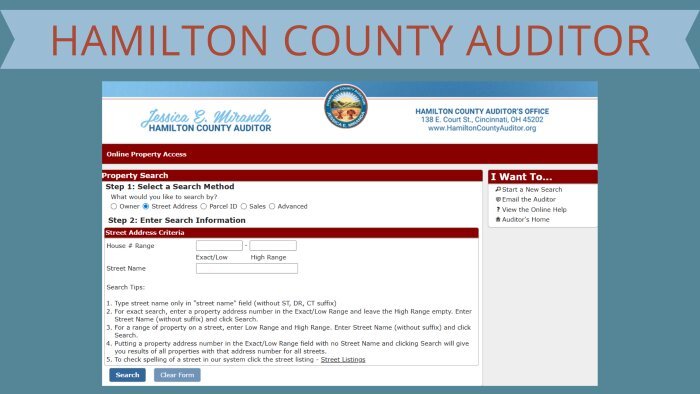 Accessibility is another key feature. The property search is available online at www.hamiltoncountyauditor.org and hamiltoncountyauditor.org, ensuring that anyone with internet access can use it. This reflects the Auditor’s commitment to modernization and transparency. By digitizing property records and making them publicly available, the office has reduced barriers to information and improved efficiency in county operations.
The system also supports broader community goals. By making property data open and easy to access, the Auditor’s office encourages informed decision‑making. Citizens can better understand how their taxes are calculated, researchers can track housing trends, and businesses can plan investments with confidence. This openness strengthens the relationship between government and the public, showing how technology can improve services and accountability.
Overall, the Hamilton County Auditor’s Property Search is more than a database—it is a vital public service. It empowers residents to understand their property taxes, supports professionals in their work, and strengthens trust between government and citizens. By combining transparency, accessibility, and fairness, the property search system demonstrates how technology can improve government services and make them more responsive to community needs.
Beyond taxes, the property search is valuable for analyzing neighborhood development and investment opportunities. Developers can use the system to study growth patterns in specific areas, while homeowners can monitor how property values in their neighborhood are changing over time. Real estate agents and appraisers rely on the tool to provide clients with accurate advice, making it a professional resource as well as a public one.